
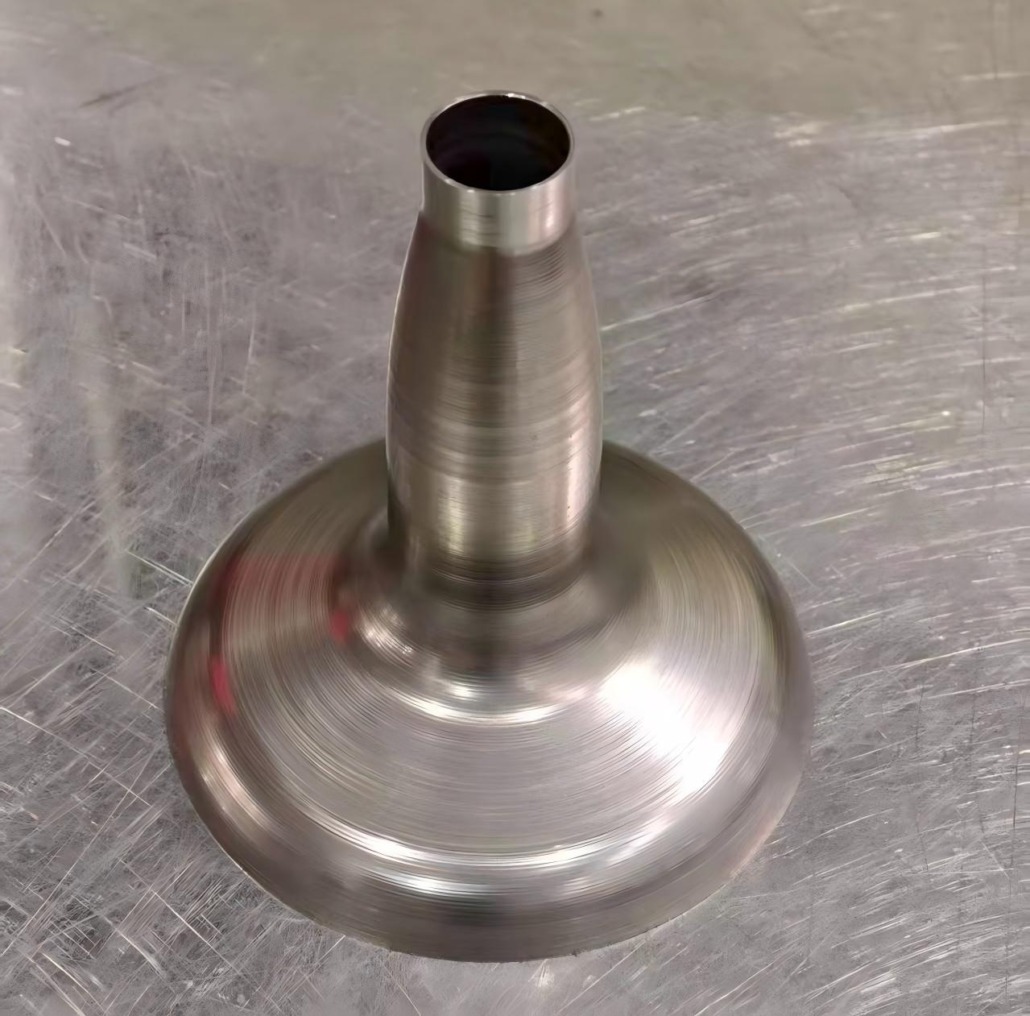
Bulging
Bulging
ChinaCustomStamping are a China-based metal parts manufacturing company for metal stamping and deep drawing. Tube bulging, also simply called bulging, is a critical sheet metal stamping operation used to fabricate seamless hollow and tubular metal components. In today’s global precision manufacturing market, OEM buyers from automotive, aerospace, plumbing, hydraulic systems, and general machinery are constantly seeking reliable suppliers for custom metal stamping, deep drawn parts, and tubular expansion forming services. Conventional fabrication routes like CNC machining and welded tube assemblies often introduce weld seams, high material waste, residual stress, and poor fatigue performance. Bulging forming overcomes these pain points by using dedicated stamping dies to apply internal pressure on hollow or tubular blanks, stretching the tube wall radially outward to expand the workpiece diameter. This plastic metal forming process delivers seamless thin-wall parts with superior surface finish, making bulging a core capability for ChinaCustomStamping and many professional metal stamping manufacturers serving international customers.
1. Deformation Characteristics of Bulging Forming
Bulging follows distinct plastic deformation principles that differentiate it from other metal stamping processes such as deep drawing, flanging, and air bending. During the bulging operation, plastic deformation of the blank is confined strictly to a defined forming zone. Material does not flow from non-deformed regions into the bulging area, nor does raw material feed into the deformation zone from outside. All of the increase in the workpiece surface area comes exclusively from controlled thinning of the tube or sheet wall. This fundamental trait creates a unique biaxial tensile stress state within the metal blank: the material is under simultaneous tangential (circumferential) tension and radial tension.
Under extreme forming conditions, local bulging on flat sheet metal can produce wall thinning up to 50% of the original sheet thickness at the center of the deformed zone. For hollow tube blank bulging, the maximum wall thinning can reach 30% of the initial blank wall thickness. Unlike deep drawing, which frequently suffers from wrinkling defects caused by compressive circumferential stress, bulging rarely develops wrinkling or buckling instability. The primary failure mode for bulged stamping parts is cracking, triggered when wall thinning exceeds the material’s forming limit. Parts produced via bulging typically have smooth surfaces and excellent cosmetic quality. That said, the bulging process cannot deliver perfectly uniform wall thickness across the entire component, and this limitation must be considered in part design for custom metal stamping projects.
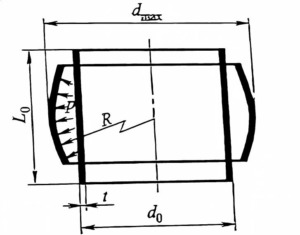
The maximum achievable deformation for bulging is constrained by the ultimate elongation of the base metal material. Stamping process engineers use the bulging coefficient Kz as the core metric to quantify bulging formability.
Kz = dmax⁄d0
Where:
Kz = bulging coefficient;
dmax = maximum outer diameter of the workpiece after bulging (mm);
d0 = original diameter of the cylindrical tube blank before bulging (mm).
This formula demonstrates that a higher bulging coefficient represents a larger radial expansion and greater plastic deformation. Reference tables provide approximate bulging coefficient values for common stamping metals, which are essential data points during early-stage process simulation and die design. The bulging limit varies significantly based on material grade, blank relative thickness t / d0 × 100, and heat treatment state of the metal blank.
For 10# low carbon steel, when the blank relative thickness ranges from 0.45 ~ 0.35, the bulging coefficient is 1.10 for non-annealed blanks and 1.20 for annealed blanks. When relative thickness reduces to 0.35 ~ 0.28, the bulging coefficient drops to 1.05 for non-annealed steel, while annealed 10 steel maintains a higher value of 1.15. For aluminum tube blanks, within the 0.45 ~ 0.35 relative thickness range, the bulging coefficient is 1.20 for non-annealed stock and 1.25 after annealing. At 0.35 ~ 0.28 relative thickness, non-annealed aluminum has a bulging coefficient of 1.15, while annealed aluminum remains at 1.20. These data clearly confirm that annealing heat treatment improves metal ductility and raises allowable bulging deformation for both steel and aluminum sheet metal. Thinner relative blank thickness generally lowers the maximum forming limit for tube bulging stamping.
Process modifications can further increase the bulging coefficient for custom stamping production. Applying axial compressive load to the tube blank at the same time as radial pressurization during bulging will raise the allowable deformation level. Localized heating of the bulging zone is another proven technique to dramatically boost the bulging coefficient. Aluminum tube blank testing data offers actionable guidelines for metal stamping workshops. Simple rubber bulging of aluminum tubing delivers a limit bulging coefficient of only 1.2 ~ 1.25. Adding axial compression to rubber bulging raises this limit to 1.6 ~ 1.7. Local heating of the deformation zone to 200 ~ 250℃ pushes the bulging coefficient to 2.0 ~ 2.1. The highest forming capacity comes from edge bulging with a heated conical punch at 380℃, with a limit bulging coefficient ranging from 2.5 ~ 3.0. Heating reduces the flow stress of aluminum, improves material ductility, and greatly expands the forming window for tube bulging stamping.
2. Bulging Process Calculation for Sheet Metal Stamping
Process calculation is a mandatory pre-production step before stamping die fabrication and mass production. Calculations cover two core areas: blank dimension sizing and bulging force estimation. Precise mathematical calculation prevents premature part cracking, cuts raw material waste, and allows metal stamping suppliers such as ChinaCustomStamping to properly select press tonnage and optimize stamping die structure for custom deep drawn and bulged components.
2.1 Blank Dimension Calculation
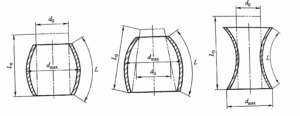
For hollow tube blank bulging applications where both tube ends are permitted to freely shrink during forming, blank length is calculated using this formula:
L0 = L(1 + cε) + B
Where:
L0 = blank length (mm);
L = generatrix length of the finished bulged part (mm);
c = empirical coefficient, typically set to 0.3 ~ 0.4;
B = trimming allowance, normally 5 ~ 15 mm;
ε = bulging elongation rate, calculated as ε = dmax − d0⁄d0
The elongation rate ε describes the relarcumferential stretch of the tubular metal blank during bulging. Coefficient c accounts for axial shrinkage of tube ends under biaxial tension. The trimming allowance B adds extra material for post-forming edge cutting, to remove irregular, distorted edges caused by uneven deformation at the tube ends. After bulging, tubular stamping parts commonly have burrs, uneven profiles, or minor end distortion, so trimming stock must be included regardless of workpiece material. If blank ends are clamped rigidly and axial contraction is restricted, this formula cannot be used, and a revised blank length calculation is required for the custom stamping design.
The technical reference diagram shows three classic bulging configurations: mid-section tube expansion, bulging with tapered transition sections, and end diameter enlargement. Each geometry has unique generatrix length definitions and distinct axial material flow behavior. In metal stamping workshops, process engineers select the matching calculation model based on the customer’s part drawing and validate the calculated blank length through prototyping and trial bulging samples.
2.2 Calculation of Bulging Force
Bulging force defines the minimum press tonnage required for the stamping operation. Insufficient press capacity results in incomplete forming; over-sized tonnage wastes equipment investment and risks damaging stamping die components. The formula for bulging force calculation:
F = qA = 1.15σb × 2t⁄dmax × A
Where:
F = bulging force (N);
q = unit bulging pressure (MPa);
A = surface area of material undergoing bulging deformation (mm²);
σb = tensile strength of workpiece metal (MPa);
dmax = maximum diameter after bulging (mm);
t = original blank material thickness (mm)
The factor of 1.15 acts as a safety margin to account for inconsistent material properties, friction between blank and stamping die, and localized stress concentration. Unit bulging pressure increases with material tensile strength and blank thickness, while it decreases as the maximum bulging diameter increases. High-strength steel stamping parts demand substantially higher bulging force compared to aluminum alloy components with identical geometry. The participating surface area A only counts material that experiences plastic radial stretching; rigid, non-deformed zones at the tube ends are excluded.
This calculation method works for rubber bulging, hydraulic bulging, and mechanical bulging processes. The forming medium delivers uniform radial pressure against the tube wall. In hydraulic bulging, internal hydraulic pressure corresponds directly to the unit bulging pressure q in the formula. For mechanical bulging using conical split punches, friction between punch and blank increases total forming force, so stamping engineers add extra safety allowance to the calculated value.
3. Common Bulging Methods & Industrial Applications for Custom Metal Stamping
Bulging forming can be grouped by pressure medium: rubber bulging, hydraulic bulging, rigid mechanical punch bulging, and hot bulging. Each bulging technique fits different batch sizes, metal materials, and part geometries for custom metal stamping and deep drawing projects.
Rubber bulging uses elastic rubber as the pressure transfer medium. As the punch compresses the rubber plug inside the tube blank, rubber expands radially and pushes the tube wall to conform to the stamping die cavity. Benefits include low die cost, simple die structure, and zero liquid leakage risk, making rubber bulging ideal for small-batch prototyping of thin aluminum and low-carbon steel tubular parts. The main limitation is limited forming pressure, which restricts the maximum bulging coefficient. Adding axial compression to tube ends during rubber bulging is a widely used optimization to raise the forming limit for custom stamping.
Hydraulic bulging replaces rubber with high-pressure fluid. Internal hydraulic pressure applies even radial tension to the tube blank. This method achieves larger bulging deformation and more complex curved profiles. Hydraulic bulging is widely used for automotive exhaust components, pressure vessel sections, and pipe fitting stamping parts. However, stamping dies require precision sealing structures to prevent fluid leakage, and equipment capital cost is higher than rubber bulging.
Hot bulging combines localized heating and plastic forming. Heating the deformation zone lowers metal yield strength and improves ductility, especially beneficial for less formable alloys such as aluminum. Aluminum tube test data clearly shows local heating drastically increases the limit bulging coefficient. Hot bulging is selected for large-diameter thick-wall tubular components and hard-to-form lightweight alloys.
Mechanical bulging with segmented conical punches expands the tube wall outward through radial movement of split die segments driven by a tapered mandrel. It delivers high production speed and excellent dimensional repeatability for high-volume mass production, although stamping die construction is complex and tooling cost is higher.
ChinaCustomStamping are a China-based metal parts manufacturing company for metal stamping and deep drawing. Bulging is frequently integrated with deep drawing, tube cutting, and secondary machining within their production workflow. Many hollow custom stamping parts first require deep drawing to create a cup-shaped blank, followed by bulging on the sidewall or bottom to add expanded diameter features. In plumbing hardware, bulging creates enlarged pipe joints for assembly. In automotive manufacturing, bulged tubular stamping parts serve as structural brackets and fluid pipeline components. Compared to castings, bulged stamping parts have denser material structure and better mechanical performance. Compared with welded tube assemblies, seamless bulged components eliminate weld weakness zones and improve fatigue resistance under cyclic pressure loads.
4. Bulging Defects, Quality Control and Stamping Die Design Best Practices
Primary defects in bulging stamping include excessive wall thinning, local cracking, uneven diameter, rare end wrinkling, and springback after unloading. Excessive wall thinning is the most common failure. When circumferential stretch exceeds the material forming limit, cracks initiate at the maximum diameter section of the workpiece. Process engineers must cross-check the bulging coefficient against material test data during the custom stamping design phase. Annealing raw material before bulging is an effective method to boost metal ductility. Proper lubrication between blank and die surface reduces friction, creates more uniform material deformation, and prevents localized over-thinning of the tube wall.
Wall thickness uniformity is a critical quality metric. Since bulging relies entirely on material stretching and thinning, perfectly consistent wall thickness cannot be achieved. Buyers must define minimum allowable residual wall thickness on part drawings for custom metal stamping projects. The bulging force formula guides stamping die design and press selection. Die material selection depends on workpiece metal and production volume. Mass production of carbon steel bulged stamping parts requires high-wear die steel. For low-volume aluminum alloy bulging, standard alloy tool steel meets requirements. Polishing the die cavity surface reduces scratching on the exterior of finished bulged stamping parts.
Axial clamping system design is critical. When axial compression is applied to increase bulging limits, the clamping fixture must grip tube ends securely without slipping while delivering controllable axial force. Excessive axial compressive force will cause tube blank buckling; insufficient axial force leaves the full forming potential unused. For hot bulging, stamping dies must account for workpiece thermal expansion and cooling channel layout. Heating zone temperature must be precisely controlled to avoid overheating, grain coarsening, and degraded mechanical properties of the finished stamping part.
5. SEO: Bulging in the Global Custom Metal Stamping Supply Chain
Industrial buyers worldwide search for high-intent keywords including metal tube bulging service, tubular stamping parts, hollow part expansion forming, aluminum tube bulging, custom deep drawn components, China metal stamping manufacturer, precision sheet metal stamping. Manufacturers like ChinaCustomStamping publish in-depth technical content to help global industrial buyers understand bulging capabilities and evaluate if tube bulging fits their component design. Many procurement and design engineers lack full knowledge of bulging process limits. Well-optimized technical articles reduce back-and-forth quotation communications and build trust in the technical expertise of custom metal stamping suppliers.
Bulging has clear application boundaries when compared with alternative metal forming operations. It cannot produce unlimited expansion ratios; maximum deformation is capped by the base metal elongation property. Bulging delivers best results for thin-walled seamless hollow stamping parts with moderate radial expansion. Part designers should avoid overly aggressive bulging ratios that create high scrap rates. Early collaboration between product designers and metal stamping manufacturers is strongly recommended. Supplier engineers can propose design revisions, adjust corner radii, reduce required bulging coefficients, and optimize blank layout before committing to costly stamping die manufacturing.
6. Conclusion
Bulging is a specialized biaxial tensile plastic forming process designed for hollow and tubular metal blanks. Its core characteristic is wall thinning to achieve surface expansion, with no material inflow entering the deformation zone from outside. The bulging coefficient quantifies forming limits, which can be improved by axial compression, localized heating, and blank annealing. Blank length calculation and bulging force estimation form the foundation of process planning and stamping die development. Multiple bulging technologies, including rubber bulging, hydraulic bulging and hot bulging, cover production needs ranging from low-volume prototyping to high-volume mass custom metal stamping.
As global manufacturing continues the shift toward lightweight seamless metal components, tube bulging will grow in importance as a sheet metal forming solution. ChinaCustomStamping are a China-based metal parts manufacturing company for metal stamping and deep drawing, integrating bulging among its core custom forming services. Mastery of bulging deformation theory, process calculation rules, defect mitigation and stamping die design enables metal stamping manufacturers to deliver premium tubular components for automotive, machinery, and fluid system clients. When designers evaluate manufacturing routes for hollow thin-wall metal parts, bulging should be considered as a competitive seamless forming alternative to welding, casting, and CNC machining.
FAQ
Q: What is tube bulging in metal stamping? A: Tube bulging (bulging forming) is a sheet metal stamping process expanding hollow or tubular blanks radially outward by internal pressure. Material deforms under biaxial tension, achieving seamless hollow parts by controlled wall thinning.
Q: What is bulging coefficient Kz? A: Bulging coefficient Kz = dmax/d0. It describes the maximum allowable radial expansion ratio. Higher Kz means larger bulging deformation, limited by material ultimate elongation.
Q: What defects happen in bulging stamping? A: The main defects are excessive wall thinning and cracking. Wrinkling rarely occurs because bulging works under biaxial tensile stress, different from deep drawing.


