
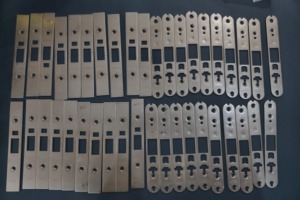
 In metal stamping manufacturing, single operation dies (also called simple dies) are essential tools for producing precise, functional metal components across industries. Designed to complete one stamping operation—such as blanking, bending, drawing, or forming—in a single press stroke, they differ from compound or progressive dies that handle multiple tasks at once. This guide simplifies their definition, key types, design principles, advantages, applications, and maintenance for manufacturers, engineers, and business owners, focusing on practical value and how ChinaMetalStamping delivers tailored, high-quality custom single operation die solutions for your hardware manufacturing needs.
What is a Single Operation Die? A single operation die is a stamping die that completes one specific task (cutting, bending, drawing, or forming) in a single press stroke. Each press cycle targets one process, making these dies simple, cost-effective, and ideal for both small-batch prototypes and large-volume production. Their simplicity is a key advantage, as they’re easy to maintain and adapt to different part requirements.
ChinaMetalStamping is a professional Chinese manufacturer specializing in single operation dies, with years of experience serving automotive, electronics, aerospace, and hardware industries. Our team uses advanced technology and strict quality control to deliver custom dies tailored to your material, part geometry, and production volume—ensuring precision, efficiency, and long service life.
Key Types of Single Operation Dies
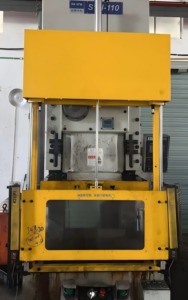
Single operation dies are categorized by the stamping process they perform. Below are the four main types, simplified for clarity:
1. Pure Blanking Single Operation Dies
The most basic and widely used type, pure blanking dies cut flat, desired shapes from metal sheets (shearing process). They consist of a punch, die block, stripper plate, and die set—no additional bending or forming. Ideal for flat parts like washers, gaskets, and small metal contacts (used in electronics, automotive, and hardware).
ChinaMetalStamping’s pure blanking dies handle materials from aluminum to stainless steel (0.2mm–8.0mm thickness), with high precision and clean edges. Our engineering team works closely with you to design standard or custom dies that meet exact specifications.
2. Blanking + Bending Single Operation Dies
These combine blanking (cutting the shape) and bending (forming angles/curves) in one stroke, eliminating separate operations. They include both blanking and bending components, with precise engineering to avoid operation interference and compensate for metal springback. Used for brackets, clips, hinges, and sheet metal enclosures (automotive, electronics).
We use advanced CAD simulation to ensure synchronized blanking and bending, with high-quality tooling materials for durability in high-volume production.
3. Blanking + Drawing Single Operation Dies
Blending blanking and drawing (forming 3D shapes by pulling the blank into a die cavity), these dies include a blank holder to prevent wrinkling. Ideal for cups, housings, oil pans, and metal containers (packaging, automotive). Key considerations: material flow, blank holder pressure, and precise punch/die clearance.
ChinaMetalStamping’s expertise in these dies ensures uniform thickness, smooth finishes, and seamless integration of both operations—even for large automotive components.
4. Blanking + Forming Single Operation Dies
These combine blanking with forming processes (flanging, embossing, coining, curling) to create complex 3D parts. Flanging adds strength/mounting surfaces; embossing creates textures/logos. Used in aerospace (flanged brackets), consumer electronics (embossed casings), and automotive (trim pieces).
Our team specializes in custom forming dies, using CAD/CAM software and precision machining to deliver tight tolerances and consistent quality.
Key Design Principles of Single Operation Dies
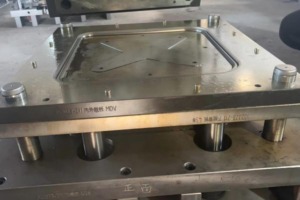
To ensure performance and durability, we follow four core principles—critical for long die life and high-quality parts:
-
Material Selection: Use high-quality tool steels (Cr12MoV, SKD11), carbide (for high-wear applications), or alloys—matched to your stamping material and production volume.
-
Precision & Tolerance: Machining to ±0.001 inches using CNC, EDM, and wire-cut EDM machines; inspected with CMM tools for accuracy.
-
Structural Stability: Rigid die sets (cast iron/steel) and FEA simulation to prevent deflection and misalignment during stamping.
-
Lubrication & Cooling: Advanced systems to reduce friction, prevent wear, and dissipate heat—extending die life and ensuring part quality.
Advantages & Limitations (For Informed Decisions)
Advantages
-
Simple design: Easy to manufacture, assemble, and maintain—reducing downtime and costs.
-
Versatile: Adaptable to different parts (modify punch/die for new shapes) and ideal for small-batch/prototypes.
-
Cost-effective: Lower initial and maintenance costs vs. complex dies (perfect for small-medium production volumes).
-
High precision: Optimized for one operation, ensuring tight tolerances (ideal for electronics/aerospace).
-
Easy troubleshooting: Simple structure makes it easy to identify issues (e.g., worn punch, improper lubrication).
Limitations
-
One operation per stroke: Multiple dies needed for complex parts (increases labor/time).
-
Lower efficiency for high-volume complex parts: Progressive dies are better for large-scale production.
-
Potential manual handling: Small batches may require manual feeding—we offer semi-automatic systems to solve this.
Industry Applications of Single Operation Dies
Single operation dies are used across key industries—here’s how they add value:
-
Automotive: Brackets, clips, hinges, oil pans, and electronic connectors (our dies meet strict safety/quality standards).
-
Electronics: Small precision parts (contacts, shields, heat sinks) with thin sheets (0.2mm+) and tight tolerances.
-
Aerospace: High-strength components (flanged brackets, fasteners) meeting extreme condition requirements.
-
Household Appliances: Washers, brackets, handles, and embossed decorative panels (cost-effective high-volume production).
-
Hardware: Nuts, bolts, washers, and hinges (efficient production of small parts).
Maintenance Tips for Long Die Life
Proper care extends die service life—follow these simple steps (backed by ChinaMetalStamping’s expertise):
-
Regular inspection: Check for wear/misalignment after 10,000 strokes or each production run.
-
Lubrication: Use the right lubricant for your material; clean debris regularly.
-
Replace worn components: Promptly replace punches/die blocks to avoid poor part quality or die damage.
-
Proper storage: Clean, lubricate, and store in a dry environment to prevent deformation.
Future Trends in Single Operation Dies
The industry is evolving—ChinaMetalStamping stays ahead with:
-
Smart dies: Sensors for real-time monitoring (punch force, temperature) to optimize production.
-
Advanced materials/coatings: PVD/CVD coatings and new tool steels for enhanced durability.
-
3D printing: Fast production of complex die components for prototypes/custom dies.
-
Simulation software: FEA/CAD to optimize designs and reduce prototyping time.
Conclusion
Single operation dies are simple, versatile, and cost-effective—ideal for a wide range of metal stamping needs. Whether you need a pure blanking die for washers or a custom blanking+forming die for complex aerospace parts, ChinaMetalStamping delivers high-quality, tailored solutions. Our skilled engineers, advanced technology, and commitment to customer satisfaction ensure your dies meet precision, efficiency, and durability requirements.
Contact ChinaMetalStamping today for custom single operation dies that fit your project—we turn your requirements into reliable, high-performance tools.


